Facebook

How to Vet an E-Foil Component Manufacturer

How to Vet an E-Foil Component Manufacturer

E-foil programs put machined aluminum under salt water, thin walls under flight loads and low volumes under real cost pressure, so the shortlist matters as much as the drawing package. This guide gives sourcing teams a nine-dimension screen for any hydrofoil parts supplier, then shows where a partner already machining aluminum efoil mast components, fuselage mounts and pre-finished modular sets sits inside that same framework.

9 scored dimensions Vendor-neutral screening criteria
12 RFQ questions Send the same pack to every candidate
Prototype to volume One process window, per drawing
Machined hydrofoil component produced for e-foil assembly programs
Module 1 — The Stakes

Why E-Foil Part Sourcing Fails

E-foil hardware fails supplier evaluation in four predictable ways. Each one is a process problem rather than a machining problem, which is why a shortlist built on price per part usually breaks at the first design revision.

RISK 01

Thin-wall mast distortion

A mast is a long extrusion-like body with thin walls relative to its length. Clamping pressure, heat and multiple re-clamps can bow or twist it during machining, and the deviation is often invisible until the foil is under load on the water.

Downstream cost: scrap of an entire machined lot, plus a re-qualification cycle on the drawing.
RISK 02

Saltwater corrosion at finishes and fasteners

Sea service attacks the finish first and the fastener pair second. Anodize coverage on threads, bores and cut edges decides how many seasons the assembly survives; a visually perfect part can still fail where the coating thins.

Downstream cost: warranty claims, field failures and a finish specification rewritten mid-program.
RISK 03

Low-volume, high-mix order economics

E-foil programs ship in tens and hundreds, not tens of thousands, and they revise often. Suppliers optimized for long runs absorb every engineering change as setup time, which arrives later as cost and lead-time creep.

Downstream cost: per-revision surcharges, quoting delays and a stalled design freeze.
RISK 04

Electromechanical interface mismatch

Mast, fuselage, mount plates, motor and harness must line up as a single system. A supplier can pass every single-part dimensional check and still deliver a stack that will not bolt together on the assembly line.

Downstream cost: hand-fitting at the bench, re-machined mounts and a slipped launch date.
Module 2 — The Framework

The 9-Dimension Qualification Matrix

Score every candidate supplier against these nine dimensions. There is no supplier column here on purpose: this matrix is meant to be usable even if you choose a different vendor, and the later modules cite these rows by number instead of restating them.

# Dimension What good looks like Red flags
01 5-axis machining envelope A stated single-setup envelope for mast-length and fuselage-profile parts, with workholding described for thin-wall support. Avoid: long parts re-clamped in several operations, or a quote with no explanation of how the part is supported while it is cut.
02 Dimensional tolerance capability Achievable tolerances agreed per feature class, with the verification method named before the first cut. Avoid: "tight tolerance" language with no method, no inspection plan and no report at delivery.
03 Aluminum grade traceability Grade named on the PO, with mill certification or lot traceability linking billet to finished part. Avoid: a generic "aerospace-grade aluminum" claim that never resolves to a grade on paper.
04 Anodize process control Finish class defined per part, coverage discussed for threads and bores, racking and masking practice agreed up front. Avoid: anodize treated as a cosmetic last step with no coverage or class discussion.
05 Motor and harness assembly capability In-house assembly of power and wiring modules, delivered as test-ready electromechanical units. Avoid: loose hardware shipped with the expectation that you assemble the electrical side yourself.
06 FAI and inspection reporting First-article inspection and dimensional reporting on the first parts, before volume release. Avoid: first approval by eye, with data available only if you ask for it.
07 Prototype-to-volume NPI discipline The prototype process window is carried into volume, with the same fixture and inspection logic. Avoid: prototypes built by a different team or method than the production run.
08 Turnkey supply-chain depth Machining, finishing, assembly and logistics coordinated under one responsible owner. Avoid: four subcontractors and no single party accountable when a fit problem appears.
09 NDA and IP handling Signed NDA, restricted CAD distribution and agreed data retention before drawings are released. Avoid: CAD files circulated by email with no written terms or version control.
Module 3 — Mast Deep Dive

What Mast Components Specifically Demand

Matrix row 02 and row 03 stop being abstractions the moment a mast goes on the table. The mast is where grade, straightness and finish converge, because it is simultaneously a structural member and a hydrodynamic surface.

CNC machined aluminum mast section prepared for an electric hydrofoil assembly
Mast-length aluminum bodies combine structural duty, thin walls and a hydrodynamic surface finish.

The five things to interrogate on a mast drawing

  • Grade certification and mill traceability Grade should be stated on the purchase order and tied to a mill certificate or lot record, so the finished part can be traced back to the billet.
  • Straightness and bow control over the full length Ask how the part is supported and measured end to end, not just at the root and tip.
  • Wall-thickness uniformity Uniform wall sections carry flight loads more predictably and reduce the risk of thin-wall deflection during machining.
  • Anodize class for saltwater service Finish class, coverage on threads and bores, and masking practice all need agreement before the first batch.
  • Surface finish and its effect on drag The machined surface is part of the hydrodynamic package, so finish consistency belongs in the acceptance criteria.
Module 4 — Interfaces

Fuselage & Mount Interface Demands

This is the module about interfaces rather than individual parts. A supplier can satisfy every single-part check in the matrix and still fail the assembly, because error accumulates along the interface chain and arrives as one problem at the bench.

Where error accumulates

Mount-plate flatness
Start of the stack
+ Mast-to-fuselage mating
Compounding error
+ Mount hole pattern position
Where fits go tight
+ Motor & harness bracket
Full assembly stack

Each block is a separate drawing, but only one supplier should own the cumulative result. Ask who reviews the stack-up across all four interfaces before quoting, and how CAD-to-part fidelity on the mount plate is verified.

Fuselage mount plate and structural parts machined for e-foil integration
Fuselage mount parts must match the mast root, the fuselage body and the mount hole pattern at once.
Module 5 — Integration

Electro-Mechanical Integration and Assembly

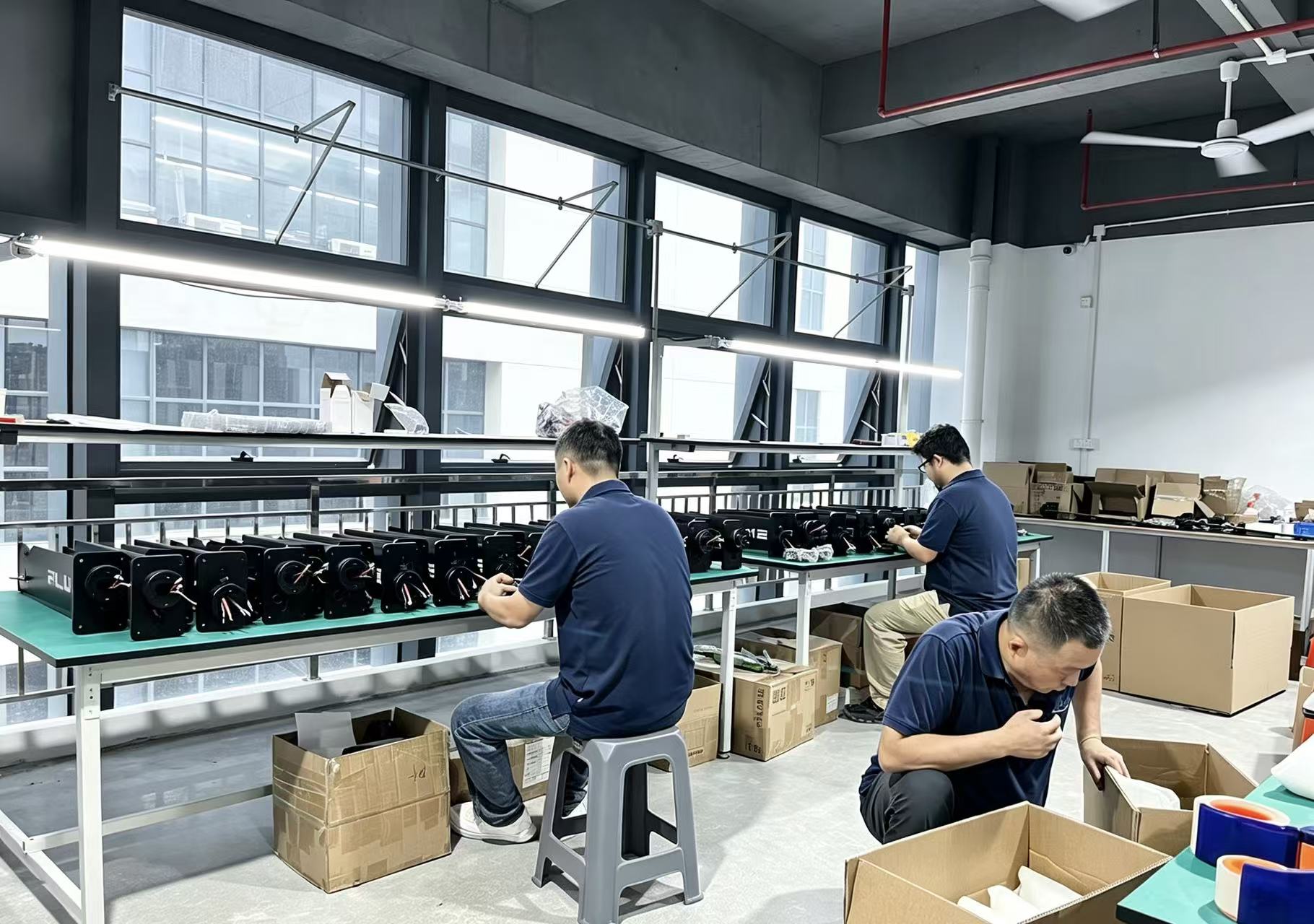
Matrix rows 05 and 08 decide whether you receive parts or a working module. If the electrical side is assembled elsewhere, interface risk moves downstream to your line instead of the supplier's.

Machined and assembled e-foil module with wiring and motor hardware integrated
Assembly-ready delivery means the structural, power and wiring sides are mated and checked before shipment.
Integration

Electro-mechanical integration

Precision assembly of power and wiring modules is what keeps performance stable on a marine e-foil platform, where vibration and moisture expose any loose interface.

Assembly

One-stop assembly

In-house motor and harness assembly turns machined parts into fully functional, test-ready electromechanical modules rather than a box of hardware.

Consistency

Production consistency

A multi-station workflow enforces strict quality control across both prototype and volume OEM hydrofoil orders, so the tenth unit matches the first.

Module 6 — Decisions

Scenario-to-Specification Decisions

Use these five program scenarios to turn the matrix into a specification. Each row names what to write into the RFQ and which supplier decision it forces.

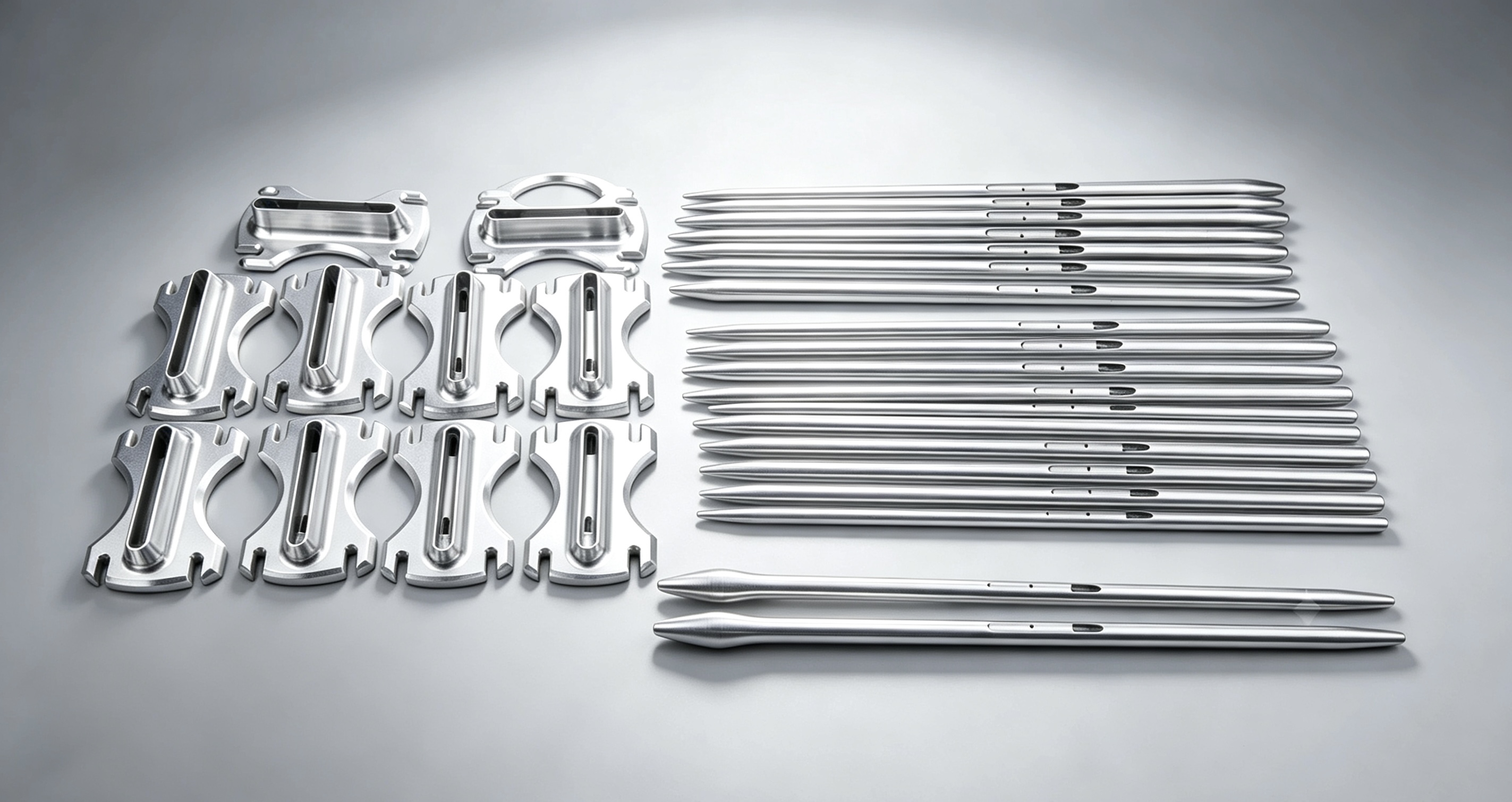
Set of CNC machined modular hydrofoil structural components laid out for assembly
Machined hydrofoil component produced for e-foil assembly programs
Machined and assembled e-foil module with wiring and motor hardware integrated
Precision machined e-foil parts produced as a modular component setA modular component set lets one supplier own the whole structural interface, not one part of it.

First prototype foil

Specify

Prototype quantities, one complete modular set, and a drawing revision-control rule before cutting starts.

Decide

Whether to use a prototype-tolerant shop now or a supplier whose process window carries into volume.

Saltwater demo fleet

Specify

Anodize class and fastener pairing for continuous sea exposure, with coverage requirements on threads and bores.

Decide

Who signs off on finish coverage, and what evidence arrives with the batch.

Retrofit mount for an existing fuselage

Specify

CAD file of the mating interface, flatness requirement and hole-pattern position, plus the fit clearance you will accept.

Decide

Whether the supplier machines to your CAD as released, or re-models the interface before quoting.

Scaling from 10 to 500 units

Specify

Same process window as the prototype, first-article inspection before volume release, and repeatability reporting.

Decide

Which supplier can prove NPI discipline rather than promise it.

Drive module shipped to the line

Specify

Motor and harness assembly scope, test-ready condition, and packaging that protects the finished finish.

Decide

Whether one-stop assembly replaces your in-house electrical build step.

Module 7 — The Scorecard

12 RFQ Questions to Send Every Candidate

Send the identical pack to every shortlisted vendor and score the answers against the matrix above. The responses are comparable only if the question set is identical.

01
What is your maximum single-setup machining envelope for a mast-length part, and how is that part supported while it is cut?
02
Which aluminum grades do you machine for marine parts, and how is grade traceability documented on the PO and on the part lot?
03
What dimensional tolerances can you hold per feature class, and how do you verify them before shipment?
04
Which anodize classes do you apply for saltwater service, and how is coverage controlled on threads and bores?
05
Can you supply a first-article inspection report before volume release, and in what format?
06
Who owns the mast, fuselage and mount interface stack-up, and will you review it against our CAD before quoting?
07
Do you assemble motor and harness modules in-house, and are they delivered test-ready?
08
How is the prototype process window carried into volume production, and who signs the change-over?
09
What is your change-control process for drawing revisions issued during an active program?
10
Which machining, finishing, welding and assembly steps are in-house versus subcontracted?
11
Will you sign an NDA, and how are CAD files received, stored, version-controlled and returned?
12
What do you need in an RFQ package — assembly drawings, material, quantity, requirements, CAD files — to return a firm price?
Module 8 — Capability Check

Where Fanxi Lands on the Matrix

The framework above is deliberately supplier-neutral. Applied to Fanxi Tech, here is the capability record behind the Hydrofoil & E-Foil Components program — precision-engineered flight hardware delivered from raw billet aluminum through to the final anodized part.

Precision machined e-foil parts produced as a modular component set
Modular structural parts are pre-finished for direct integration and assembly of e-foil hydrofoil systems
Program parameter Stated position
Material family Aerospace-grade aluminum alloys
Finish Machined and delivered as the final anodized part
Tolerance position Tight tolerance control and consistent dimensional accuracy, stated as required for e-foil stability and hydrodynamic efficiency
Production scope Prototype through volume OEM hydrofoil orders
Assembly scope In-house motor and harness assembly, delivered test-ready
RFQ inputs Assembly drawings, material, quantity, requirements, CAD files

Request a Manufacturing Proposal

Send your assembly drawings or the technical challenge you are trying to solve. The engineering team reviews the interface stack-up, the material and finish requirements, and returns a full-scale integration proposal — including custom OEM and ODM machining quoted to your CAD files.

Related Reading

Three notes to help clarify product requirements before contacting the supplier.

6061-T6 Aluminum for Marine Hydrofoil Masts and Fuselages

6061-T6 aluminum is a heat-treated alloy that balances machinability, strength, and weight for marine hydrofoil masts, fuselages, and mounting parts.

Read article

Custom Hydrofoil Fuselage Mount Parts Machined to Your CAD Files

A custom hydrofoil fuselage mount part becomes quotable when the CAD package carries enough interface, tolerance, material, and finish detail for an engineering review.

Read article

Anodized 6061-T6 Aluminum Efoil Mast Components for Saltwater

Anodized 6061-T6 aluminum helps efoil mast components resist saltwater, but the base alloy, machining condition, and sealing choices determine how the finished part performs.

Read article

Frequently Asked Questions

what should i include in a request for quote?

send assembly drawings, the material you want, the quantity, the requirements that matter for your program, and your cad files. those five inputs are what the fanxi engineering team needs to review a hydrofoil or e-foil component program and return a manufacturing proposal.

can fanxi supply complete assemblies rather than loose parts?

yes. the program covers a complete cnc-machined modular structural set, pre-finished for direct integration, plus in-house motor and harness assembly that delivers fully functional, test-ready electromechanical modules instead of a box of loose hardware.

which manufacturing processes are available in-house?

cnc machining, sheet metal fabrication, metal stamping, forging, welding and assembly, and surface finishing. on the hydrofoil program the machining, finishing and assembly steps are coordinated so that one party owns the finished module.

is custom oem and odm machining available?

yes. custom oem and odm machining is available to match project specifications, and the company also provides oem product development, contract manufacturing, supply chain integration, cost reduction engineering and turnkey manufacturing services.

what material family and finish are used for marine parts?

the program is built on aerospace-grade aluminum alloys, with parts machined from raw billet through to the final anodized part. material grade, finish class and coverage requirements should be confirmed in writing against your own drawing package before production release.

how do i submit cad files and start an integration proposal?

use the contact page to leave a message with your assembly drawings or technical challenge, and attach cad files or images where available. the engineering team then assesses the integration and responds with a full-scale proposal.

Leave a message
First Name
Last Name
Email *
Phone
Country *
Message *
Share your drawings, material, quantity, and requirements for a tailored quote.
Upload CAD Files
Upload Image
Verification code *
Click to verify