
01 / ENGINEER
Drawing & material review
Review geometry, service conditions, material grade, tolerances and annual demand before selecting the manufacturing route.
OUTPUT / TECHNICAL REVIEW
Our current work includes bicycle- and scooter-related forged parts. Send your drawing, material specification and quantity for a manufacturing review. Motorcycle and automotive examples below show further applications to evaluate.
Custom metal forging shapes solid metal under compressive force to produce a component based on its drawing. Material selection, die geometry, forming conditions and subsequent operations determine the final part requirements.
For bicycle and scooter components, details matter: mating geometry, transition radii, machining allowance and surface condition. Start with a drawing review that connects the forging blank to the finished component.
See the quality planning approach ↗Process reference: Forging Industry Association — process comparison ↗
A forging quotation starts with the application and drawing. The following items are reviewed per project rather than promised as universal factory limits.
| Requirement | What to provide | What to confirm |
|---|---|---|
| Material & condition | Required alloy grade, material standard and final condition. | Grade suitability, material availability and any heat-treatment route. |
| Geometry & dimensions | Current 2D drawing or 3D model, overall size, part mass and mating features. | Forming feasibility, die design, machining allowance and equipment suitability. |
| Tolerances & surfaces | Critical dimensions, datums, threads, surface roughness and finish specification. | As-forged acceptance criteria and features requiring secondary machining. |
| Quality documentation | Material records, dimensional report, mechanical tests or NDT required by the specification. | Inspection methods, sampling, traceability and sample approval criteria. |
| Volume & delivery | Sample quantity, order quantity, annual demand and destination. | Tooling cost, MOQ, sample timing, production schedule and packing. |
Aluminum and steel alloys appear in the industry applications on this page. A reference part does not establish the material or process for your design. Specify the exact grade and condition so suitability can be evaluated against the actual production setup.
A proposed manufacturing route for custom forged components, including bicycle and scooter-related parts. Final processes and availability are confirmed during technical review.
Review geometry, service conditions, material grade, tolerances and annual demand before selecting the manufacturing route.
OUTPUT / TECHNICAL REVIEWPlan die parting, draft and machining stock. Select hot or cold forming conditions where appropriate to the alloy, geometry and available equipment.
OUTPUT / FORGED BLANKSpecify flash trimming, heat treatment, cleaning and secondary machining according to the functional needs of the component.
OUTPUT / FINISHED GEOMETRYAgree inspection criteria, documentation and packaging. Review samples before repeat production is released.
OUTPUT / AGREED RECORDSOur work includes bicycle- and scooter-related forged parts. These component families illustrate documented industry uses of forging and provide a starting point for your drawing review.
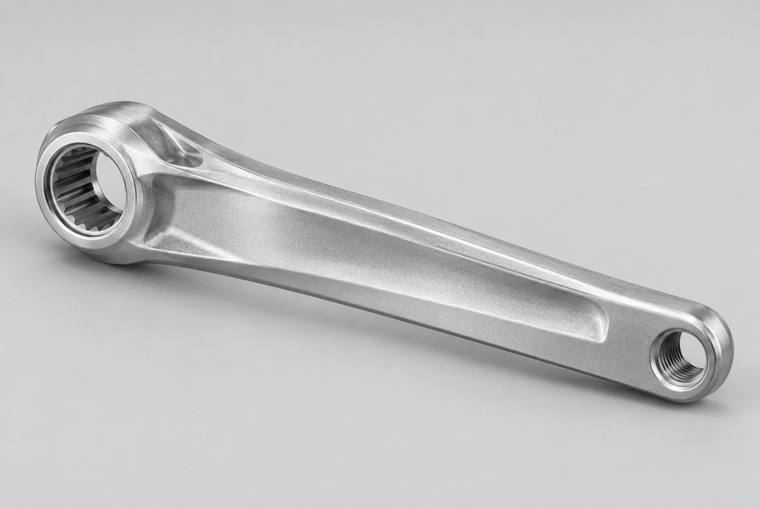
Forged crank arms are established bicycle applications, including solid and hollow designs. For a drawing review, identify pedal threads, spindle interfaces, machining stock and the required fatigue tests. Hollow-forged designs require a specific process and are not assumed to be available.
Discuss this part ↗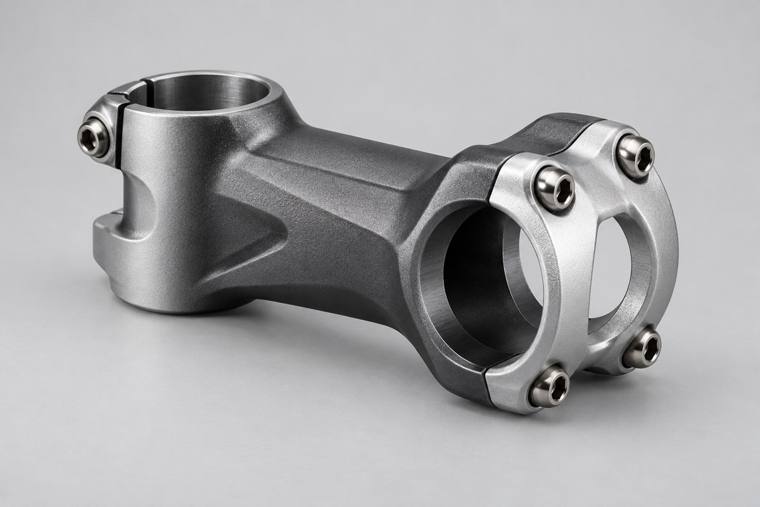
Selected aluminum stems use shape forging followed by finishing operations. Review handlebar and steerer interfaces, clamp geometry, bolt locations and dimensional requirements.
Discuss this part ↗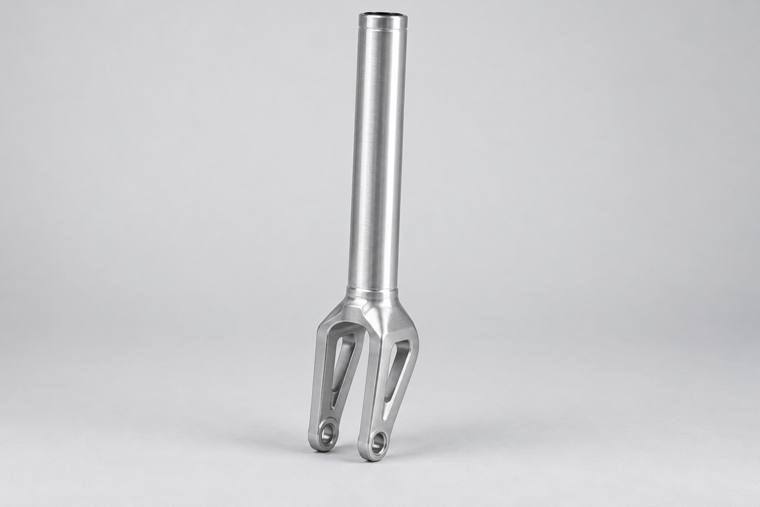
Some freestyle scooter forks use forged aluminum construction. Define steerer geometry, axle bores, offset, wheel clearance and the required validation for the intended model.
Discuss this part ↗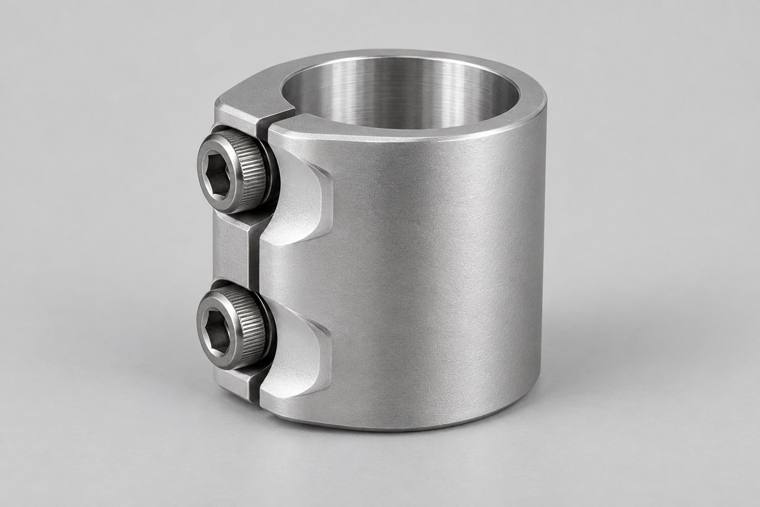
Forged aluminum handlebar clamps are used on selected scooter models. Discuss bore size, clamping geometry, bolt threads, surface finish and assembly requirements.
Discuss this part ↗Application reference images, not photographs of our production history. Product specifications and manufacturing requirements are subject to the approved drawings.
Independent examples from manufacturers: Shimano — hollow-forged crank arms ↗; Ritchey — forged stem ↗; TILT — forged scooter fork ↗; Blunt & Envy — forged clamp ↗. References explain industry use; no affiliation or supply relationship is implied.
Documented industry applications for future project discussions. Specific motorcycle parts are subject to capability review and are not presented as our existing production references.
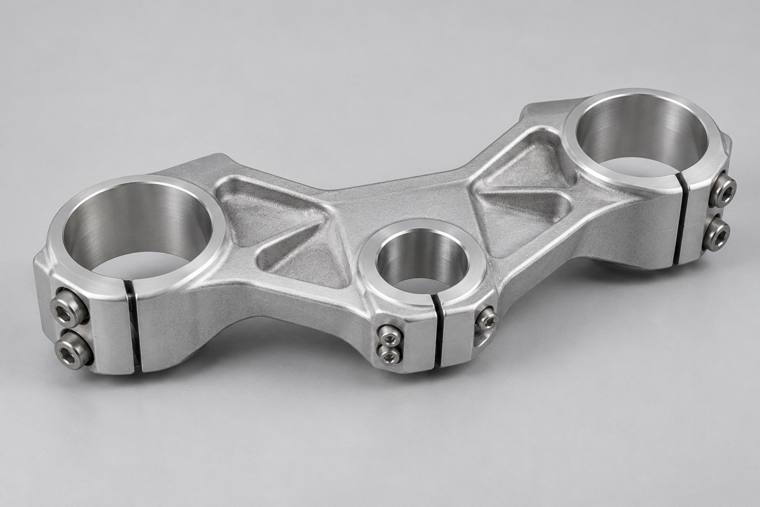
Selected motorcycle designs use forged upper or lower triple clamps. Review fork-bore spacing, steering-stem interface, clamp geometry and required machining.
Review this application ↗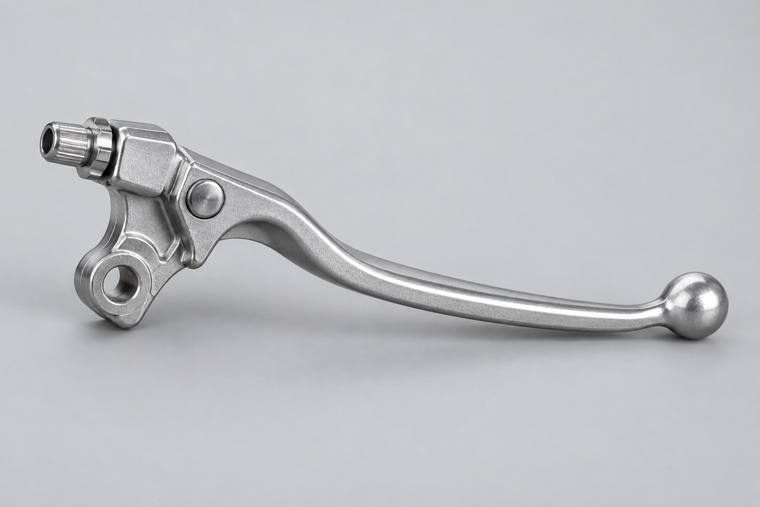
Forged aluminum clutch lever bodies are documented industry applications. Discuss pivot bores, cable interfaces, lever geometry and model-specific validation.
Review this application ↗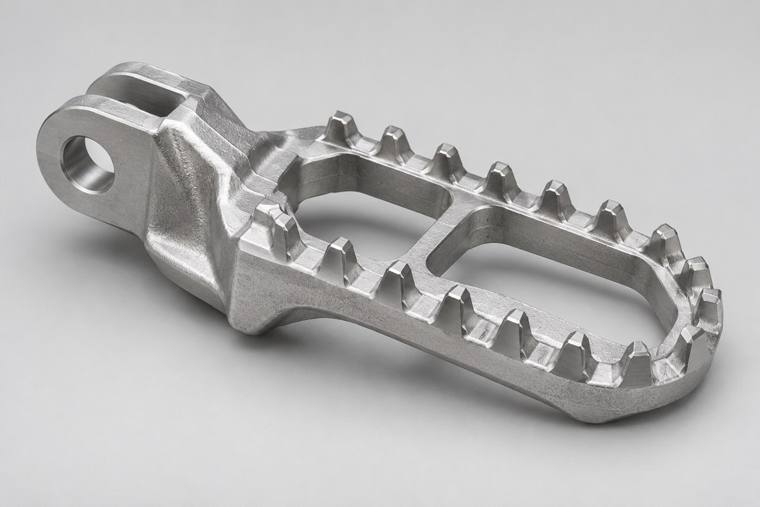
Selected motorcycle footpegs use forged aluminum followed by machining. Review mounting geometry, pivot features, grip surfaces and the specified load tests.
Review this application ↗Application reference images, not photographs of our production history. Product specifications and manufacturing requirements are subject to the approved drawings.
KTM — forged triple clamps and other selected chassis components ↗; Brembo — forged clutch lever body ↗; Harley-Davidson — forged footpegs ↗. Independent references only; no affiliation or supply relationship is implied.
Industry examples for technical discussions. Automotive supply suitability depends on the actual component, equipment, customer approval and quality requirements.
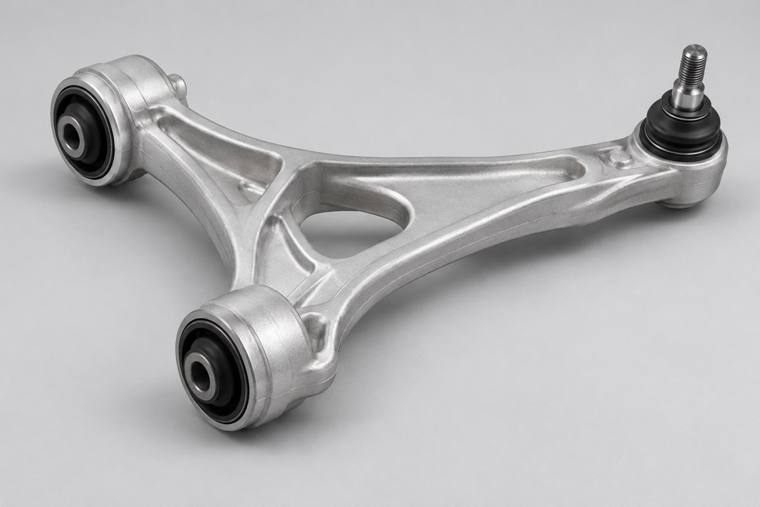
Selected automotive control arms use forged aluminum or steel. Review bushing bores, joint interfaces, machining datums and the specified dimensional and fatigue requirements.
Review this application ↗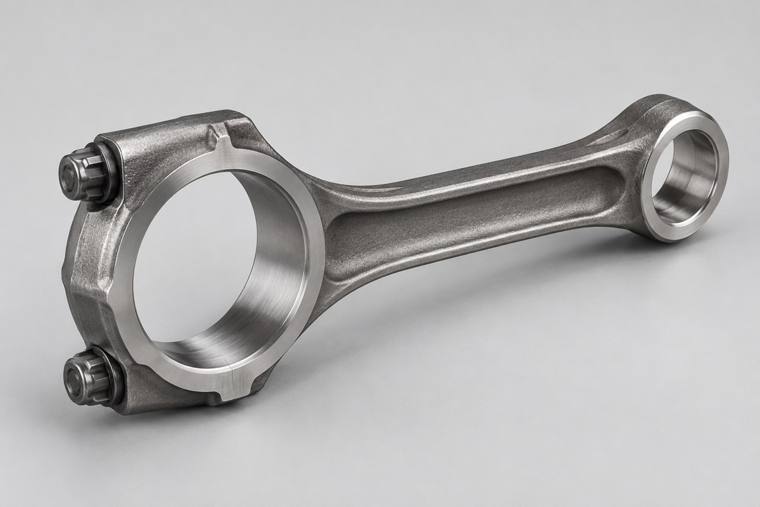
Forged steel connecting rods are established engine applications. Discuss big- and small-end geometry, material condition, machining requirements and the validation plan.
Review this application ↗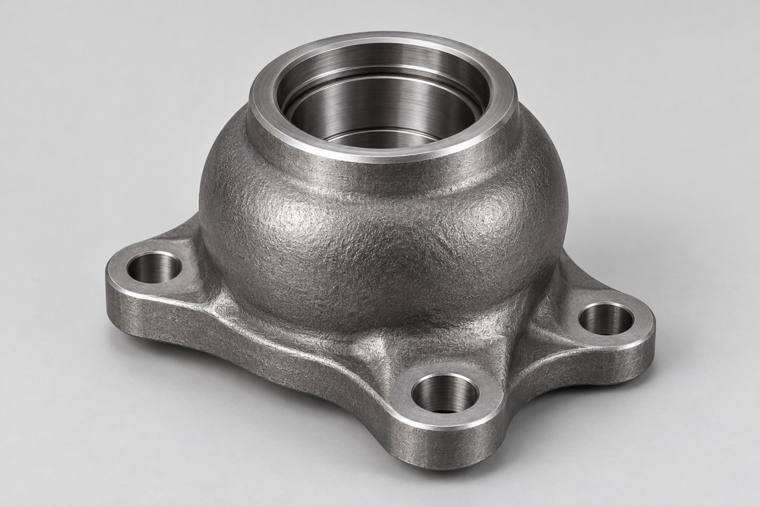
Some ball joint designs use forged steel housings. Review socket geometry, machining allowance, heat-treatment requirements and the interface to the suspension assembly.
Review this application ↗Application reference images, not photographs of our production history. Product specifications and manufacturing requirements are subject to the approved drawings.
ZF / TRW — forged aluminum and steel control arms ↗; Eagle — forged steel connecting rods ↗; Mevotech — forged steel ball joint housing ↗. Independent references only; no affiliation or supply relationship is implied.
Make acceptance criteria part of the conversation from day one. An agreed quality plan connects your drawing to the records needed for approval.
Specify material grade, certificate requirements and how batch identification should be maintained.
Identify critical dimensions, agreed measurement methods and the sample approval process.
Define hardness, mechanical tests or non-destructive testing where the specification requires them.
Agree document requirements, surface protection, labeling and packing before shipment.
The details that help turn a forging inquiry into a practical manufacturing discussion.
Provide a 2D drawing or 3D model, material grade, quantities, critical tolerances, surface finish, heat treatment and inspection requirements. Include the destination and target delivery schedule.
Documented examples include bicycle crank arms and stems; selected scooter forks and clamps; motorcycle triple clamps, clutch levers and footpegs; and automotive control arms, connecting rods and ball joint housings. Manufacturing methods vary by model. Confirm the route and production suitability for the specific drawing.
Forging forms solid metal under compressive force. Casting forms a part by solidifying molten metal in a mold. CNC machining removes material to create features and dimensions. These routes can be combined: a forged blank may be machined to finish bores, threads and other critical interfaces. Choose the route around the design and production requirements.
No. Different alloys and component geometries may require different tooling, forming temperatures and finishing operations. The examples show selected industry uses of forging; they do not establish that every model is forged or that every illustrated process is available for a project.
As-forged tolerances depend on geometry, alloy, tooling and process. Precision interfaces may require machining. Define critical dimensions during drawing review.
Minimum order quantity and lead time depend on tooling, geometry, material availability, production quantity and inspection requirements. Ask for separate schedules for tooling, first samples and repeat production during quotation.
Ask for verified equipment specifications, applicable certifications, relevant sample reports and a factory review. Confirm whether each operation is performed in-house or by an approved partner.
Prepare a clear RFQ for a more useful technical conversation.
DRAWING-BASED REVIEW · SPECIFICATIONS CONFIRMED PER PROJECT
Send your current drawing, material grade, quantity and inspection requirements for review.
info@fanxitech.com
mike@fanxitech.com
Use the website contact page to submit your inquiry, or email your project details directly.
